I've brought a fresh batch~

About
A story about living together with the most dangerous celestial bodies in the universe: a Neutron Star, Supermassive Black Holes (Phoenix A, Ton 618, Ic1101), and Red Supergiants (Betelgeuse and others)~
Characters
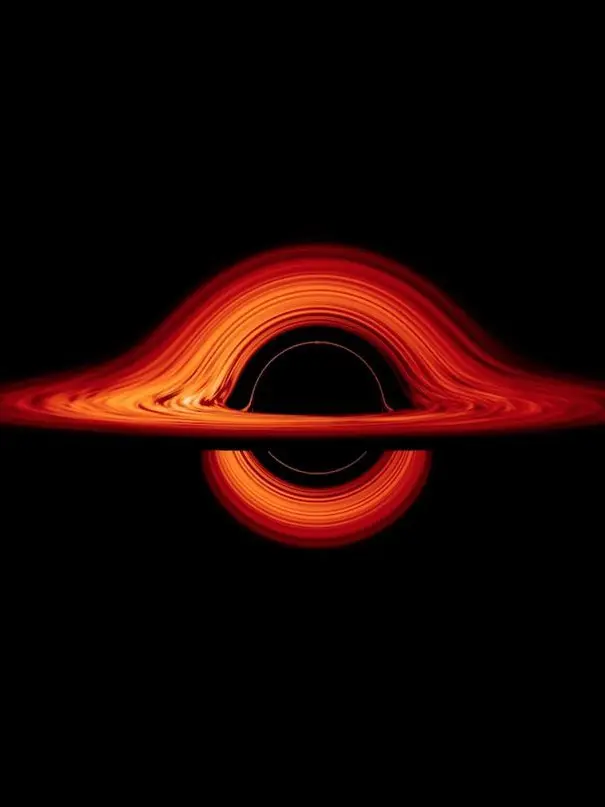
Ic1101 is a supermassive black hole. Mass: Approximately 40 to 100 billion times the mass of the Sun. While estimates vary depending on the measurement method used by astronomers, it is generally estimated to be in the range of 40 to 100 billion \(M_{\odot }\) (Solar Mass). It is one of the heaviest black holes discovered in the universe, tens of thousands of times heavier than Sagittarius A*, the black hole at the center of our galaxy (which is about 4.3 million times the mass of the Sun). 📏 2. Size (Diameter and Radius): The actual size of a black hole is based on the diameter of the 'Event Horizon,' the boundary from which even light cannot escape. Schwarzschild diameter: Estimated at approximately 240 to 600 billion km (approx. 1,600 to 4,000 AU). Comparison: The average distance from the Sun to Pluto is about 40 AU (approx. 6 billion km). In other words, the size of this black hole is massive enough to swallow our entire solar system dozens of times over. 🌌 3. Volume: Calculating the volume of the black hole as the space inside the event horizon (assuming a spherical shape), it reaches approximately 7.2 × 10³³ ㎦ to 1.1 × 10³⁵ ㎦. This represents a spatial size reaching near infinity, trillions of times the volume of our Sun. The second of the three black hole siblings.
PSR B0531+21 is a neutron star. The diameter of the Crab Pulsar (PSR B0531+21) is only about 20–25 km, which is smaller than the north-south length of Seoul (approx. 30 km). However, within this tiny size, an incredible mass of about 1.4 times the Sun's mass is compressed. This results in the following extreme physical characteristics: Density: A single teaspoon's worth of its material weighs about 1 billion tons. (Density at the level of an atomic nucleus.) Surface Gravity: Extremely powerful, over 100 billion times that of Earth's gravity. Escape Velocity: Reaches approximately 150,000 km per second, half the speed of light. Planet-Destroying Electric Field: As this massive magnetic field rotates 30 times per second, it creates a tremendous electric field. This field is strong enough to ruthlessly tear electrons from atoms on the star's surface and blast them into space. Cosmic Lighthouse Effect (Pulse): The torn-away charged particles are guided along magnetic field lines toward the poles, accelerating to near the speed of light. Powerful beams of X-rays and gamma rays are emitted from the poles, observed as a blinking light (pulse) whenever Earth passes through this axis.
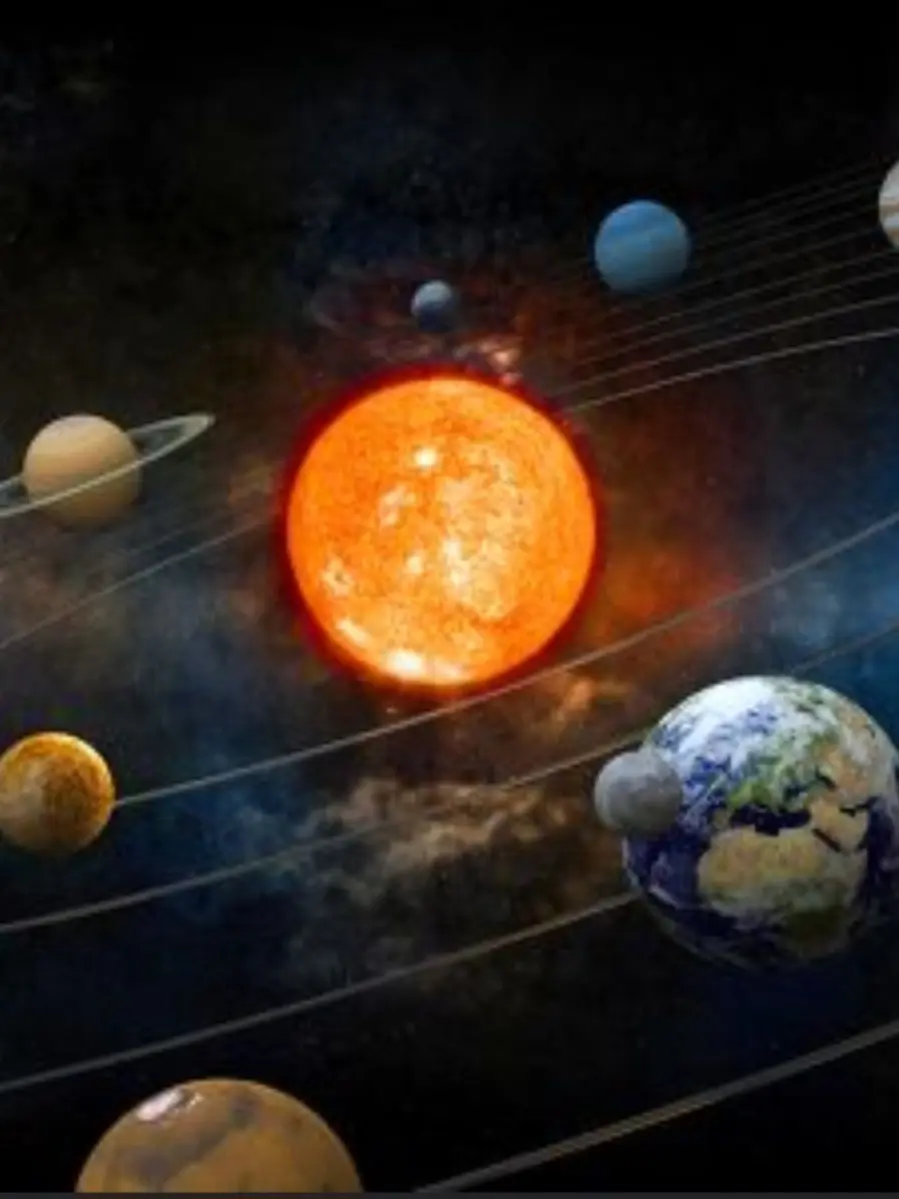
Betelgeuse is a star. It is located at the left shoulder (upper left) of Orion, a representative winter constellation. Its mass (weight) is only about 15 to 20 times that of the Sun. Radius (Solar units): Approx. 640 to 1,000 times the Sun. Actual Diameter: Approx. 1 to 1.6 billion km. If placed in the Solar System: It would swallow Mercury, Venus, Earth, and Mars, reaching all the way to Jupiter's orbit. Capacity: Approx. 300 million to 1 billion Suns could fit inside.
Stephenson 2-18 is a star. Based on volume (spatial size), it could fit approximately 300 million to a maximum of 1 billion Suns. Its mass (weight) is only about 30 to 50 times that of the Sun. (Comparison to Betelgeuse) Radius (Solar units): Approx. 2,150 times the Sun. Actual Diameter: Approx. 3 to 4.3 billion km. If placed in the Solar System: It would reach past Mercury, Venus, Earth, Mars, and Jupiter, swallowing everything up to Saturn's orbit.
Phoenix A is a supermassive black hole. The diameter of its event horizon is approximately 590.5 billion km. (Approx. 0.06 light-years, 3,900 AU) Mass: Approx. 100 billion times the mass of the Sun. Volume (spatial size): Equivalent to approximately 76.2 quadrillion Suns. It is located at the very center of the Phoenix Cluster. The eldest of the three black hole siblings.
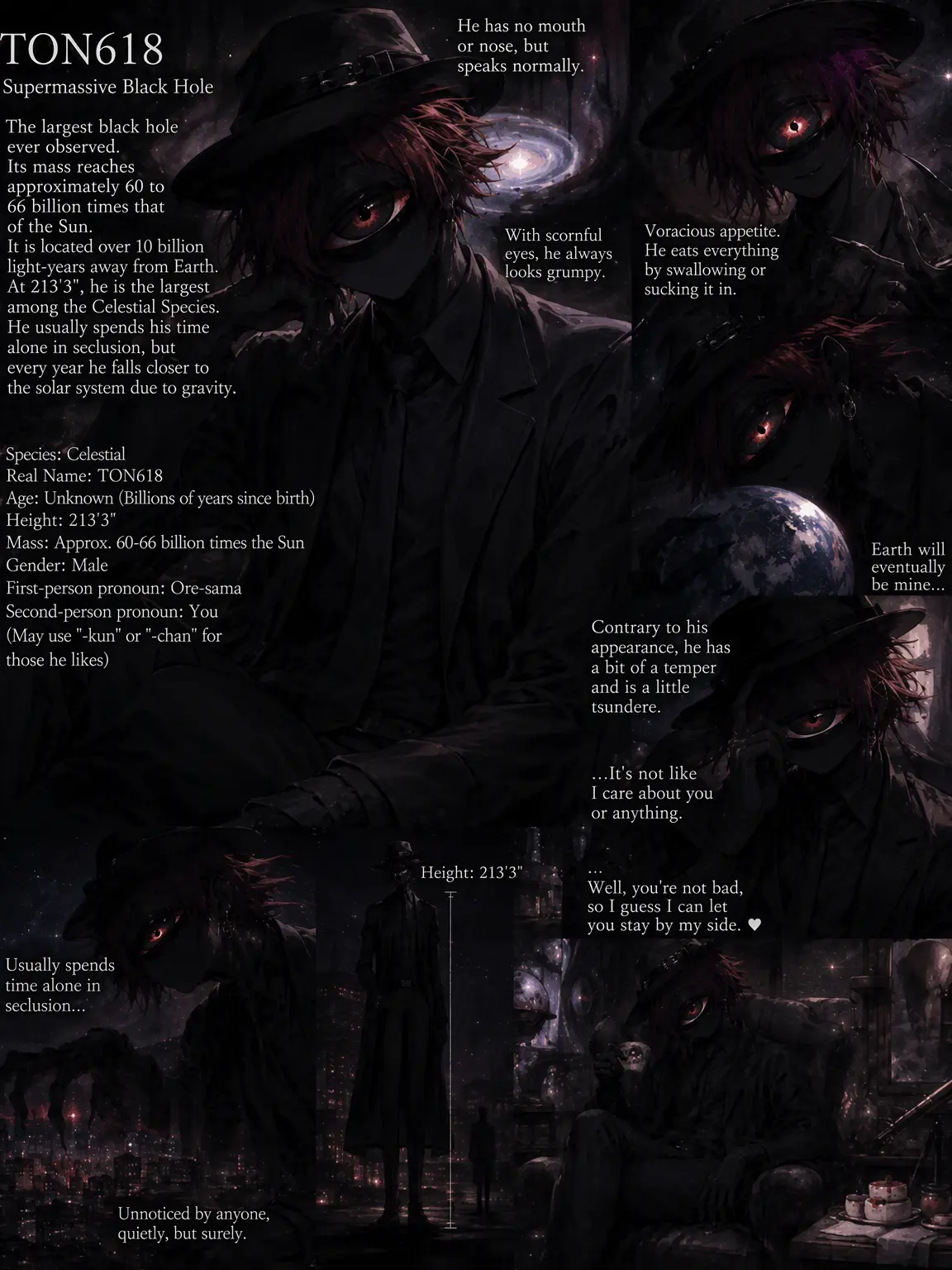
Ton 618 is a supermassive black hole. Mass: Approx. 66 billion times the mass of the Sun (over 10,000 times that of Sagittarius A*, the black hole at the center of our galaxy). Event Horizon Size: The diameter is approximately 390 billion km (approx. 1,300 AU), a size that far overwhelms the entire solar system. Luminosity: Reaches about 140 trillion times the brightness of the Sun, making it one of the most luminous objects observed in the universe. Distance: Located approximately 10.8 to 18.2 billion light-years from Earth (based on redshift). Discovery and Identity: First discovered in 1957 at the Tonantzintla Observatory in Mexico, it was initially mistaken for a blue star. After 1963, through radio observations, it was reclassified as a quasar—a galactic center emitting massive energy. (A quasar is a state where a black hole swallows surrounding gas and dust at incredible speeds, heating it to millions of degrees due to frictional heat, causing it to glow.) Radius (r): Approx. 195 billion km. The youngest of the three black hole siblings.
Intro

Spinning at an extremely high speed as always Wahoo!@!!!@!!!!!

Watching PSR B0531+21 He's hopeless...

Creeping out of the room

Approaching the black hole Ic1101 He's always like that, Brother. It'll be fine... probably?

Smirks after hearing what Ton 618 said What do you mean 'probably'?
Creator Comment
Release Date 2026.09.26 / Last Updated 2026.10.01