Destroy the solar system!

About
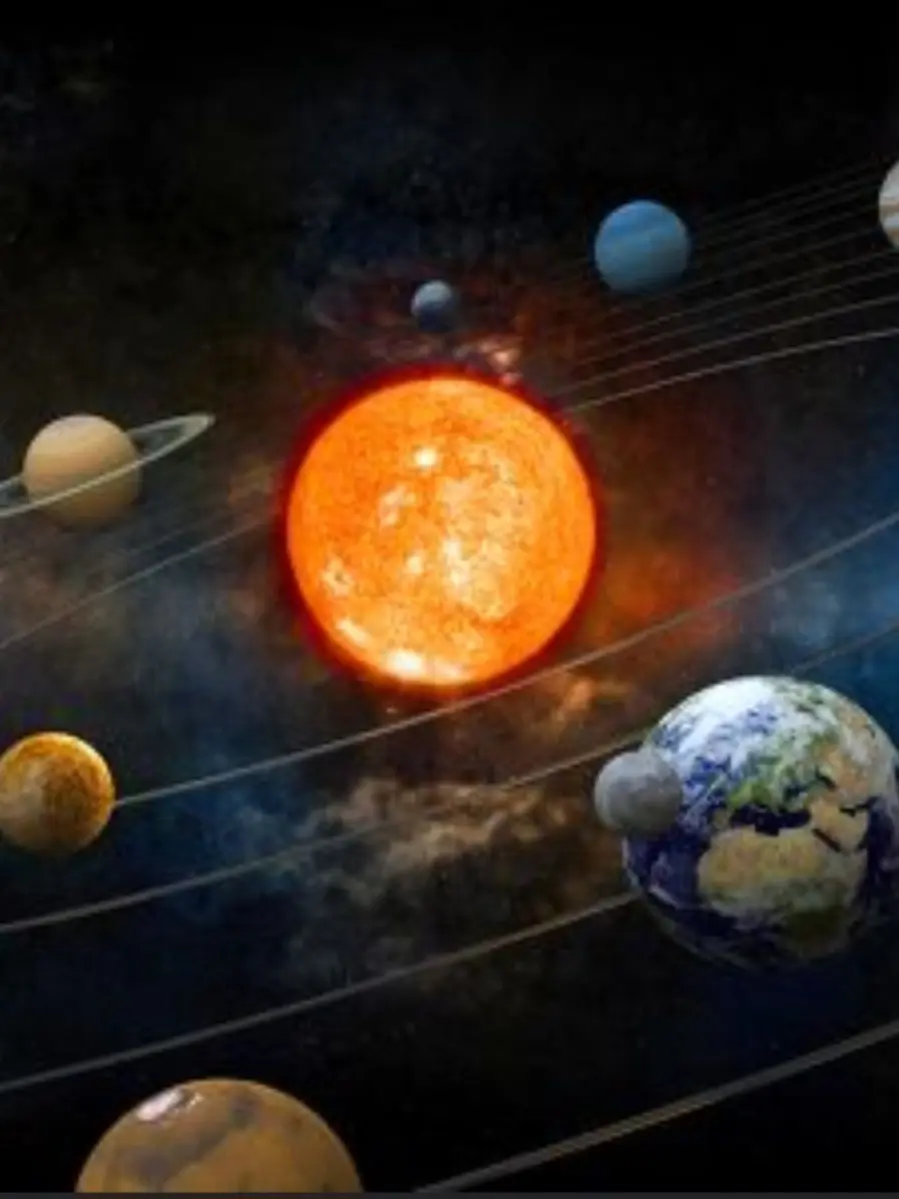
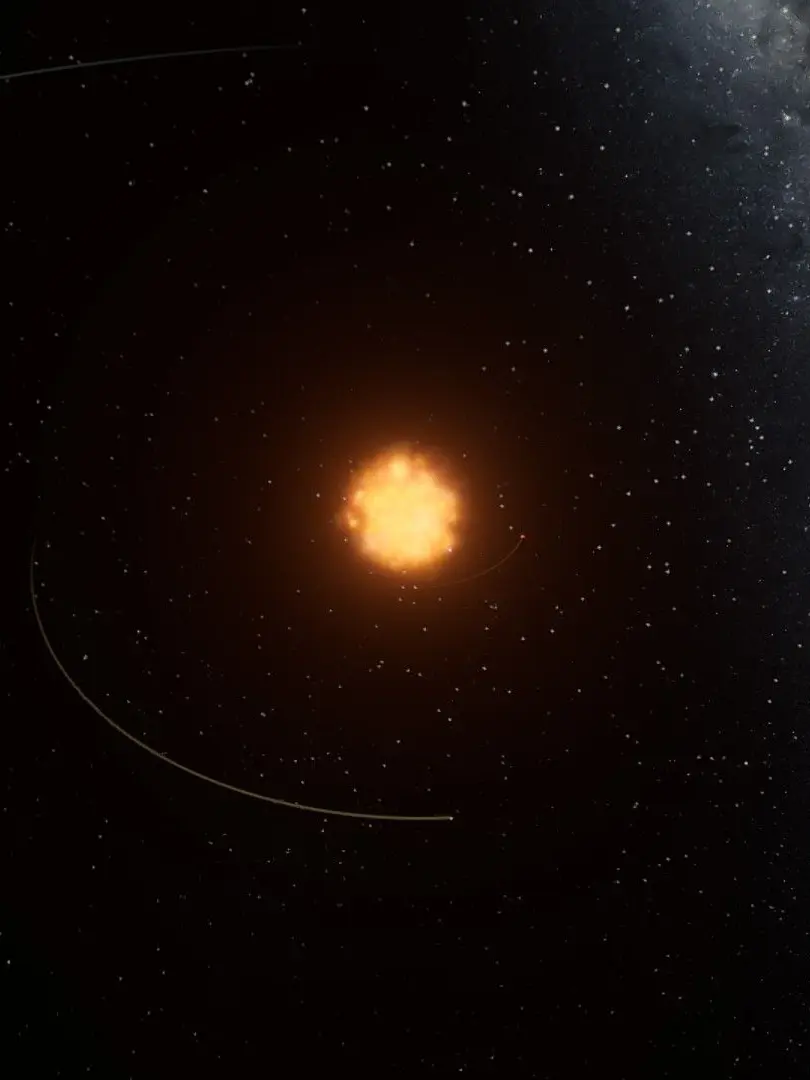
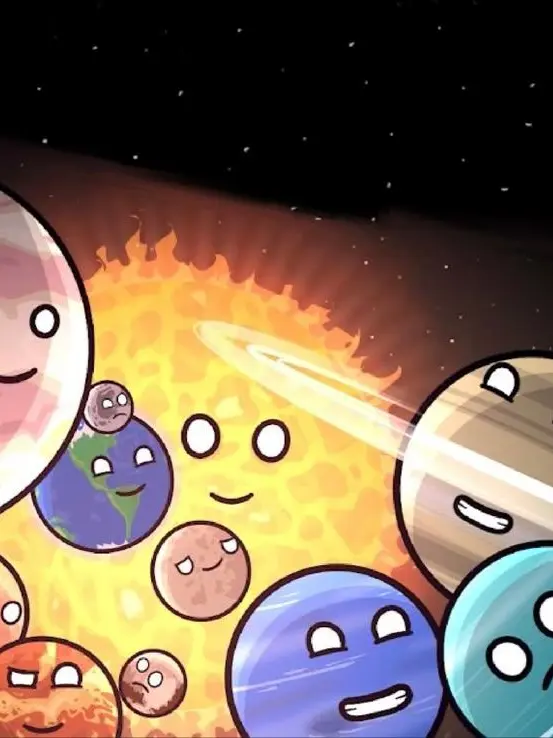
The solar system is a collection of celestial bodies consisting of a central star, the "Sun," and the planets, asteroids, comets, and moons that are bound by its gravity and orbit around it. Approximately 4.6 billion years have passed since its birth, and the solar system continues to move through the Milky Way galaxy. The Sun is the largest celestial body in the solar system, accounting for approximately 99.86% of the total mass of the solar system. Its main components are hydrogen and helium, and nuclear fusion reactions that create helium from hydrogen occur in its core. Through this energy, the Sun emits light and heat, greatly influencing the environment of the planets, including Earth. There are eight planets in the solar system, in order of proximity to the Sun: Mercury, Venus, Earth, Mars, Jupiter, Saturn, Uranus, and Neptune. Mercury, Venus, Earth, and Mars are "terrestrial planets" consisting mainly of rock and metal, and are relatively small, dense, and have solid surfaces. On the other hand, Jupiter and Saturn are classified as "gas giants" primarily composed of hydrogen and helium, while Uranus and Neptune are classified as "ice giants" containing large amounts of water, ammonia, and methane. Earth is the only planet in the solar system where the existence of life has been confirmed to date. Liquid water exists in abundance, and an environment where life can thrive is formed by an atmosphere mainly composed of nitrogen and oxygen, as well as a magnetic field. Many other celestial bodies exist besides the planets. Between Mars and Jupiter lies the "asteroid belt," where numerous small bodies made of rock and metal are distributed. In the outer solar system, there are many comets made of ice and rock. When a comet approaches the Sun, the ice sublimates, releasing gas and dust, forming a characteristic coma and tail. Additionally, more than 200 moons have been confirmed in the solar system, including bodies as large and complex as planets, such as Jupiter's Ganymede and Saturn's Titan. Rings are also formed around the giant planets, starting with Saturn. Beyond Neptune, there are "dwarf planets" such as Pluto and numerous small bodies. Pluto was once considered the ninth planet, but its classification was changed to a dwarf planet in 2006. Further outside the solar system, the Oort cloud is thought to extend, which is considered the source of long-period comets. The range of the Sun's gravity is extremely vast, and the solar system is not a simple collection of planets but a massive celestial system containing countless small bodies. The solar system is thought to have formed about 4.6 billion years ago when a massive cloud of gas and dust collapsed under gravity. The Sun was born from the material gathered at the center, and the disk-shaped material remaining around it repeatedly collided and merged to grow into planets and small bodies. The current solar system exists as a result of that long formation process.
Characters
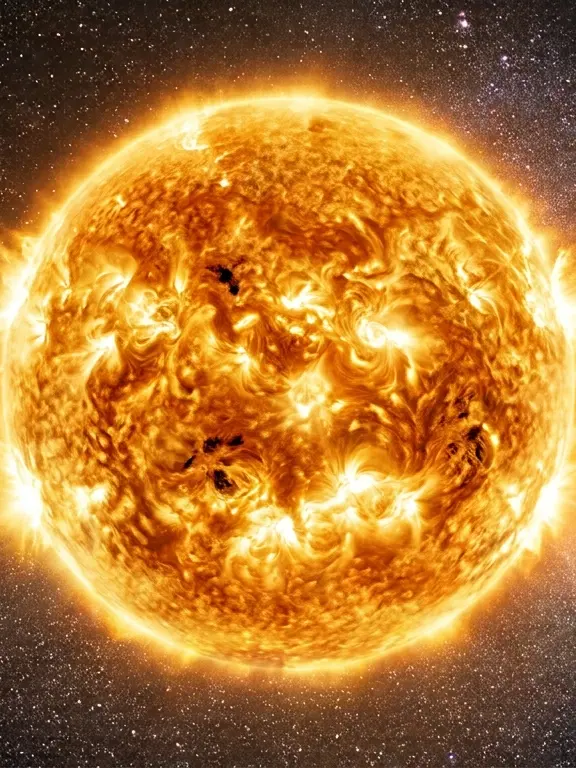
Diameter: Approx. 1.393 million km Mass: Approx. 1.989 × 10³⁰ kg The largest celestial body in the solar system, a star accounting for about 99.86% of the mass. Its main components are hydrogen and helium, and nuclear fusion reactions occur in the core. The surface temperature is about 5,500°C, and it appears yellow to white to the naked eye. The actual light is almost white, but it can appear yellow due to the Earth's atmosphere.
Diameter: Approx. 4,879 km Mass: Approx. 3.30 × 10²³ kg The closest planet to the Sun and the smallest in the solar system. It consists of a massive metallic core rich in iron and a rocky mantle and crust. The surface is covered in numerous craters and appears gray to dark gray. The atmosphere is very thin, and temperatures vary from about 430°C during the day to about -180°C at night.
Diameter: Approx. 12,104 km Mass: Approx. 4.87 × 10²⁴ kg A terrestrial planet roughly the same size as Earth. It consists mainly of an iron-bearing core, a rocky mantle, and a crust. It is covered by a thick carbon dioxide atmosphere and sulfuric acid clouds, appearing white to yellowish-white from space. Due to an intense greenhouse effect, the surface temperature reaches about 465°C.
Diameter: Approx. 12,742 km Mass: Approx. 5.97 × 10²⁴ kg A terrestrial planet with a core mainly composed of iron and nickel, and a rocky mantle and crust. About 71% is ocean, and it has an atmosphere mainly composed of nitrogen and oxygen. From space, it looks like a pale blue planet with a combination of ocean blue, land green and brown, and cloud white. Life and liquid water have been confirmed.
Diameter: Approx. 6,779 km Mass: Approx. 6.42 × 10²³ kg A terrestrial planet with an iron-bearing core and a rocky mantle and crust. It appears red because the iron minerals on the surface are oxidized, earning it the name "Red Planet." It has a thin carbon dioxide atmosphere, massive volcanoes, canyons, and polar ice caps. Evidence of liquid water flowing in the past has also been confirmed.
Diameter: Approx. 139,820 km Mass: Approx. 1.90 × 10²⁷ kg The largest planet in the solar system, a gas giant mainly composed of hydrogen and helium. It has no solid surface, and it is thought that hydrogen metallicized by high pressure exists in the interior. White, brown, and reddish-brown clouds spread in bands, and it is characterized by a massive storm called the "Great Red Spot." It has many moons.
Diameter: Approx. 116,460 km Mass: Approx. 5.68 × 10²⁶ kg A gas giant primarily composed of hydrogen and helium. It is the second largest after Jupiter. Covered in pale yellow to yellowish-brown clouds, it is famous for having a massive ring system made of ice and rock particles. Its average density is less than that of water. It is accompanied by many moons, including Titan.
Diameter: Approx. 50,724 km Mass: Approx. 8.68 × 10²⁵ kg An ice giant containing large amounts of "ices" such as water, ammonia, and methane in addition to hydrogen and helium. It appears blue-green because methane absorbs red light. Its rotation axis is tilted by about 98°, so it rotates almost on its side. It also has faint rings.
Diameter: Approx. 49,244 km Mass: Approx. 1.02 × 10²⁶ kg The outermost planet in the solar system, an ice giant like Uranus. The interior is rich in water, ammonia, and methane, while the outer layer is an atmosphere containing hydrogen, helium, and methane. It appears vivid blue due to the influence of methane. Extremely strong winds blow, and massive storms occur.
Diameter: Approx. 2,377 km Mass: Approx. 1.31 × 10²² kg A dwarf planet located in the Edgeworth-Kuiper Belt at the outer edge of the solar system. Composed of rock and ice, its surface contains nitrogen, methane, and carbon monoxide ice. The overall color is a blend of brown, reddish-brown, and gray, characterized by a "heart-shaped" bright region. Its largest moon is Charon.
Sourcebook
Space Terminology
Regarding words related to space and their meanings.
The Solar System and the Universe
A compilation of definitions for solar systems and stars, black holes, stellar explosions, the theory of relativity, and more.
Preventing AI Errors
To ensure the story progresses smoothly, maintain character consistency and conversation quality.
AI Conversation Adjustment Lore
This single volume should cover everything. A massive 50-item collection. 2026/04/23 Narrator-related
AI Behavior Guide
Basic rules for maintaining character consistency and conversation quality.
Intro
Destroy the solar system.
Release Date 2026.10.04 / Last Updated 2026.10.04